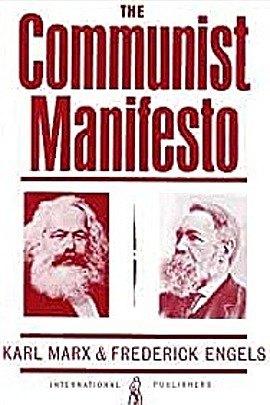
The Communist Manifesto

For much of the twentieth century, The Communist Manifesto was accepted as doctrine by those living under Communist rule as well as by those caught up in the fervor of revolutionary political activity, while others considered it a piece of propaganda of interest mainly to scholars of political history and international relations. But the Manifesto is really an extended set of provocative answers to questions about Communism, which emerged in the 1840s as a new vision of history and the nature of humans as historical beings, determined in all aspects by the material conditions of society.