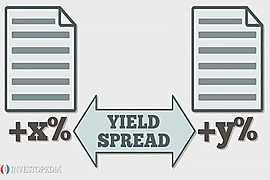
Yield Spreads
Yield Spreads measure the difference in interest rates at a given time for debts of various maturity dates but the same quality

- The most common spread looked at is the US 10 Year Treasury Bond minus the US 3 Month Bill
- Typically look at long-term rates vs. short-term rates
- Long term rates usually are higher than short term rates
- Example:
- US 10 Year Treasury Bond Interest Rate = 3.5%
- US 3 Month Treasury Bill Interest Rate = 2.25%
- Yield Spread = 3.5% - 2.25% = 1.25%
- Falling US Treasury Yield spreads may help indicate an upcoming recession
- This erodes the profitably of banks
- Erodes the profitability of anyone borrowing short & lending long
- Studied by the San Francisco Federal Reserve
- Ten Year minus Three Month yield spread is "the most reliable" indicator of a recession in the next 12 months (compared to other spreads)
- All historical inversions have been followed by recessions
- A negative spread is not required. Below a positive 40bp spread, historical recessions have occurred
- 17/17 flattenings since 1921 have resulted in a recession
- Falling yield spreads impact banks and other financial institutions that borrower short and lend long (reduced margins)
Flattening Yield Curve Impacts on Credit Quality
- When yield curves flatten, lenders tend to lower their risk premiums to keep profits up
- This setups up a bad situation (underwater loans)
Historical Examples Where the Fed Incorrectly Said Yield Spreads Don't matter
- The Fed has said in the past that yield spreads are only one indicator - not very reliable
- In both 1989 and 1999 Alan Greenspan said that yield curve inversion was not relevant - the economy was still strong
- This was proven false - there was a recessions shortly after both times
- In 2008 Ben Bernanke ignored the yield curve collapse before the 2008 recession